
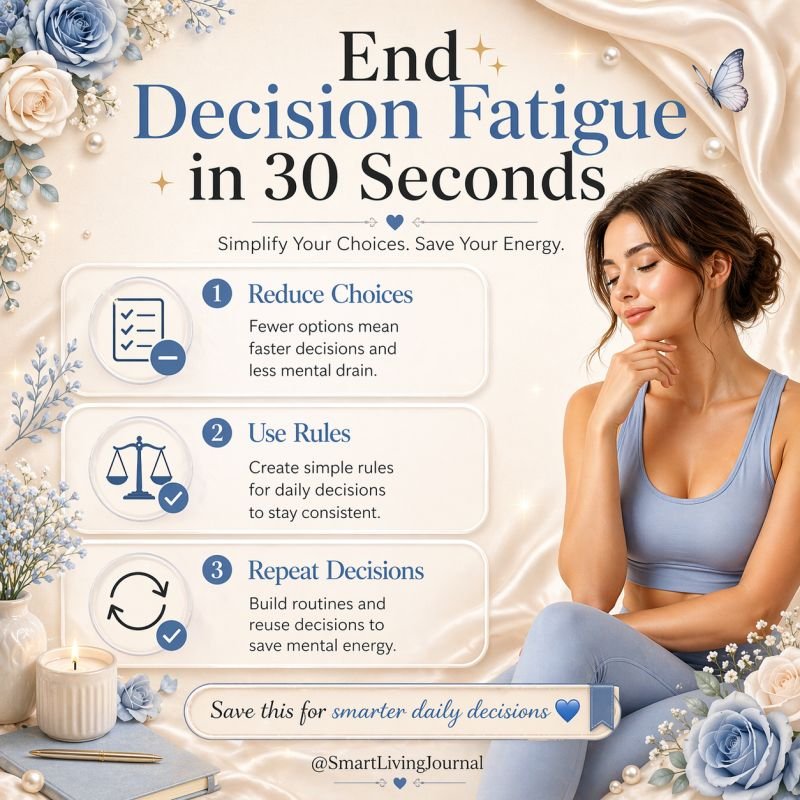
Did you know the average adult makes over 35,000 choices every single day? From the moment you wake up, your brain processes a constant stream of options, which often leads to mental exhaustion.
Much like how browser extensions or ad blockers can cause site errors that stop your workflow, internal mental blocks prevent you from moving forward. When your cognitive load becomes too heavy, your productivity suffers significantly.
Learning how to End Decision Fatigue in 30 Seconds is a vital skill for any modern professional. By clearing this mental clutter, you reclaim the bandwidth needed to focus on what truly matters. Simple, actionable habits allow you to regain control and make sharper choices throughout your busy day.
Key Takeaways
- The average person faces thousands of daily choices that drain mental energy.
- Technical glitches like ad blockers mirror the internal friction caused by overthinking.
- Quick mental resets help restore your focus and productivity levels.
- Small, consistent habits are the best way to manage your cognitive load.
- Reclaiming your mental bandwidth leads to better long-term outcomes.
Understanding the Mechanics of Cognitive Overload
Cognitive overload is not just a feeling; it is a measurable biological response to constant decision-making. When your brain processes too many options, it begins to struggle with focus and clarity. Learning how to eliminate cognitive overload is essential for maintaining your daily productivity and mental well-being.
The Science Behind Decision Fatigue
Every choice you make, from what to wear to complex work tasks, consumes glucose and oxygen in the prefrontal cortex. This area of the brain handles executive functions like planning and impulse control. When these resources run low, you experience decision fatigue, which often leads to poor judgment.
Seeking decision fatigue relief requires understanding that your willpower is a finite resource. Once this resource is depleted, your brain naturally looks for shortcuts to save energy. This is why you might find it harder to make smart choices after a long, stressful day at the office.
Why Your Brain Craves Simplicity
Your brain is wired to conserve energy whenever possible. To eliminate cognitive overload, it often defaults to established habits or avoids making choices altogether. This is a survival mechanism designed to keep you from becoming overwhelmed by trivial details.
By creating routines, you allow your brain to operate on autopilot for mundane tasks. This preserves your mental energy for the decisions that truly matter. Embracing simplicity is not about being lazy; it is about being strategic with your cognitive capacity.
Recognizing the Symptoms of Mental Exhaustion
Identifying the early warning signs of burnout is a critical step toward long-term decision fatigue relief. You might notice that you feel irritable or indecisive when faced with simple questions. Other common symptoms include procrastination and a sudden inability to focus on complex projects.
When you feel these symptoms, your brain is signaling that it needs a reset. Ignoring these signs can lead to chronic stress and decreased performance. Paying attention to your mental state allows you to intervene before you reach a point of total exhaustion.
How to End Decision Fatigue in 30 Seconds
Breaking the cycle of mental exhaustion starts with simple, immediate physical actions. When you feel overwhelmed by a mountain of choices, your brain often enters a state of paralysis. You can End Decision Fatigue in 30 Seconds by using specific techniques that act as a circuit breaker for your stressed mind.

The Power of the Micro-Decision Reset
A micro-decision reset is a brief pause designed to shift your focus away from the noise of competing options. By stepping back for just a few moments, you allow your prefrontal cortex to recover from the strain of constant evaluation. This intentional pause is the most effective way to End Decision Fatigue in 30 Seconds and regain your clarity.
Using Deep Breathing to Clear Mental Fog
Deep breathing serves as a physiological anchor when your thoughts begin to spiral. When you inhale deeply and exhale slowly, you signal to your nervous system that it is safe to relax. This simple act reduces cortisol levels and helps clear the mental fog that often clouds your judgment.
Try to focus entirely on the sensation of air entering and leaving your lungs. Even three or four intentional breaths can significantly lower your stress levels. This practice creates the necessary space to approach your next task with a calm and centered perspective.
The Five-Second Rule for Immediate Action
When you find yourself stuck in a loop of overthinking, the five-second rule provides the momentum you need to move forward. Simply count backward from five to one, and upon reaching one, take immediate action on the task at hand. This technique is a powerful tool for quick decision-making because it bypasses the brain’s tendency to dwell on potential risks.
By counting down, you interrupt the habit of hesitation before it takes hold. It forces your brain to shift from a state of analysis to a state of execution. Using this method consistently helps you build the confidence to make choices without getting trapped in analysis paralysis.
Streamlining Your Daily Routine to Save Mental Energy
Most people waste their best cognitive resources on trivial choices before they even start their workday. By proactively managing your environment, you can reduce decision fatigue and preserve your mental clarity for the tasks that truly matter. A structured approach to your day acts as a shield against the constant pressure of modern life.
Automating Mundane Choices
Automation is not just for machines; it is a powerful tool for your personal life. When you automate repetitive tasks, you remove the need to think about them entirely. For example, setting up recurring grocery deliveries or choosing a standard breakfast menu can drastically lower your daily cognitive load.
By creating a system for these minor details, you reduce decision fatigue significantly. You no longer have to weigh options when you are already tired. Instead, you simply follow the plan you established when your mind was fresh.
The Benefits of Batching Similar Tasks
Task batching involves grouping similar activities together to minimize the mental cost of switching contexts. When you jump between different types of work, your brain loses focus and energy. By dedicating specific blocks of time to email, administrative work, or creative projects, you maintain a higher level of efficiency throughout the day.
This method allows you to enter a flow state more easily. It prevents the constant start-stop cycle that drains your willpower. When you batch your tasks, you are essentially protecting your brain from unnecessary friction.
Creating Decision-Free Zones in Your Morning
Your morning is the most critical time to protect your mental energy. By establishing a decision-free zone, you ensure that your early hours are spent on high-impact work rather than trivialities. This might mean laying out your clothes the night before or following a strict, pre-planned morning sequence.
When you remove the need to make choices early on, you reduce decision fatigue and set a positive tone for the rest of the day. Consistency is the key to building a sustainable lifestyle that keeps you sharp and focused. By prioritizing your energy, you gain the freedom to tackle your most important goals with confidence.
Techniques for Efficient Decision Making Under Pressure
Mastering efficient decision making is the secret to staying calm when the stakes are high. When the pressure mounts, your brain often struggles to process too much information at once. By adopting a structured approach, you can maintain your performance and avoid the common pitfalls of mental fatigue.

Applying the Eisenhower Matrix for Quick Prioritization
The Eisenhower Matrix is a powerful tool that helps you distinguish between what is truly urgent and what is merely noise. By categorizing tasks into four quadrants, you can quickly identify which items require immediate attention and which can be deferred or deleted. This method is essential for efficient decision making because it removes the guesswork from your daily workflow.
Focusing on high-impact tasks allows you to clear your mental space for the challenges that actually move the needle. It feels incredibly liberating to let go of minor tasks that do not align with your primary goals. When you prioritize effectively, you stop reacting to every incoming request and start acting with clear intent.
Limiting Options to Prevent Analysis Paralysis
Too many choices often lead to a state of mental gridlock known as analysis paralysis. To combat this, try to limit your available options to three or fewer before making a final call. This constraint forces you to evaluate the most viable paths rather than getting lost in a sea of endless possibilities.
By narrowing your focus, you foster efficient decision making and reduce the cognitive load on your brain. You will find that simplicity is your best friend when time is limited. Remember that a good decision made quickly is often superior to a perfect decision made too late.
Trusting Your Intuition for Low-Stakes Choices
Not every choice requires a deep, analytical dive. For low-stakes situations, such as choosing a lunch spot or picking a font for a casual email, learning to trust your gut is a vital skill. This practice preserves your limited mental energy for the complex, high-impact decisions that truly matter.
Relying on your intuition allows for efficient decision making by bypassing the need for exhaustive research on trivial matters. Trusting yourself builds confidence and speeds up your entire process. Over time, you will develop a sharper instinct that helps you navigate daily life with much greater ease.
Overcoming Decision Paralysis in Professional Settings
You can transform your workday by mastering the art of quick, effective choices in professional settings. Modern offices often demand rapid responses, which can lead to significant mental fatigue if you do not manage your time well. Learning how to overcome decision paralysis is essential for maintaining your productivity and professional well-being.
Setting Time Limits for Meetings and Emails
One of the best ways to foster efficient decision making is to impose strict time constraints on your communication. When you give yourself a limited window to respond to emails, you stop over-analyzing minor details. Consider these strategies to keep your workflow moving:
- Use a two-minute rule for simple email replies.
- Schedule meetings for 25 or 50 minutes instead of full hours to force brevity.
- Batch your communication tasks to avoid constant context switching.
Delegating Decisions to Empower Your Team
You do not have to make every single choice yourself to be a successful leader. Delegating authority is a powerful way to reduce your own cognitive load while building trust within your team. When you empower others to make choices, you free up your mental energy for more complex tasks.
Trusting your team not only speeds up operations but also encourages professional growth among your colleagues. Start by identifying low-stakes decisions that others can handle just as effectively as you can.
Focusing on High-Impact Outcomes
To maintain excellence, you must prioritize tasks that move the needle on your most important goals. By filtering your daily choices through the lens of high-impact outcomes, you naturally ignore the noise that leads to burnout. This approach ensures that your energy is always directed toward work that truly matters.
Remember that efficient decision making is a habit that requires practice. By staying focused on the big picture, you will find it much easier to navigate the complexities of your professional life without feeling overwhelmed.
Tools and Strategies to Boost Productivity
Modern technology offers a simple path to eliminate cognitive overload and reclaim your mental space. By moving your to-do list out of your head and into a reliable system, you can significantly boost productivity. These external tools act as a safety net, allowing you to focus your energy on creative and strategic work rather than just remembering minor details.

Digital Tools for Task Management
Digital task managers are essential for keeping your professional life organized. Platforms like Trello, Asana, or Todoist allow you to capture every incoming request instantly. By centralizing your tasks, you ensure that nothing slips through the cracks.
These applications help you boost productivity by providing a clear visual overview of your day. When you see your priorities laid out, you spend less time wondering what to do next. This clarity is the first step toward maintaining a calm and focused mind.
The Role of Checklists in Reducing Cognitive Load
Checklists are one of the most underrated tools for maintaining high performance. They serve as a mental offload, ensuring that you do not have to rely on your memory for repetitive tasks. By following a list, you effectively eliminate cognitive overload during complex projects.
Whether you are preparing for a client meeting or launching a new campaign, a simple checklist keeps you on track. It removes the need to make micro-decisions about the order of operations. You simply follow the steps and move forward with confidence.
Establishing Standard Operating Procedures
Standard Operating Procedures (SOPs) are the backbone of a stress-free workflow. By documenting how you handle recurring processes, you create a blueprint for success. This consistency allows you to complete routine tasks without needing fresh mental effort each time.
When you standardize your work, you eliminate cognitive overload by turning complex processes into predictable habits. This system ensures that your output remains high even when you are tired or under pressure. Ultimately, these strategies empower you to dedicate your best thinking to the tasks that truly move the needle.
Cultivating Long-Term Mental Clarity
Achieving lasting mental clarity requires more than just quick fixes; it demands a fundamental shift in how you manage your energy. When you commit to consistent recovery practices, you build a resilient foundation for your brain. This approach allows you to maintain high performance throughout your career without burning out.
The Importance of Rest and Recovery
Rest is not a luxury; it is a biological necessity for cognitive function. Without adequate downtime, your brain struggles to process information, which directly contributes to decision fatigue. By prioritizing sleep and scheduled breaks, you create the space needed for effective decision fatigue relief.
Think of your mind like a high-performance engine that requires regular maintenance. When you step away from your desk, you allow your neural pathways to reset. This simple act of stepping back ensures you return to your tasks with renewed vigor and sharper judgment.
Mindfulness Practices for Sustained Focus
Mindfulness is a powerful tool to improve mental clarity in a world full of distractions. By practicing deep breathing or brief meditation, you train your brain to remain present. These habits help you anchor your attention, making it easier to filter out noise and stay on track.
Even five minutes of quiet reflection can significantly lower your stress levels. When you are calm, you make better choices and avoid the trap of reactive thinking. Consistency is key when building these mindfulness habits into your daily schedule.
Managing Information Intake to Prevent Overload
We live in an era of constant digital noise that can easily overwhelm our cognitive capacity. To protect your focus, you must be intentional about the information you consume each day. Limiting your exposure to non-essential news and notifications prevents the sensory overload that drains your willpower.
Curate your digital environment to support your goals rather than distract from them. By setting boundaries on your screen time, you preserve your mental energy for what truly matters. This proactive management is essential for long-term success and sustained decision fatigue relief.
Common Pitfalls That Drain Your Willpower
Success requires more than just strategy; it demands the removal of silent willpower killers. Even when you have a solid plan in place, certain behavioral patterns can quietly erode your mental energy. Recognizing these obstacles is the first step to reduce decision fatigue and maintaining your momentum throughout the day.

The Trap of Perfectionism
Perfectionism is often disguised as a high standard, but it frequently acts as a barrier to progress. When you demand flawless results, you create an environment where starting a task feels overwhelming. This unnecessary pressure often leads to procrastination and makes it difficult to overcome decision paralysis.
“Perfectionism is the enemy of progress.”
Over-Analyzing Minor Details
Many people waste precious cognitive resources on choices that have little impact on their long-term goals. Spending an hour choosing a font for an internal memo or debating minor email phrasing is a classic example of misallocated energy. By focusing on these trivial matters, you deplete the mental fuel needed for high-stakes decisions.
To reduce decision fatigue, you must learn to distinguish between high-impact and low-impact tasks. If a choice does not move the needle, try to make it quickly or delegate it entirely. This shift in perspective helps you overcome decision paralysis by keeping your focus on what truly matters.
Ignoring Your Biological Rhythms
Your brain is not a machine that runs at the same speed all day. Many individuals ignore their natural energy peaks and valleys, attempting to force complex work during their most exhausted hours. This misalignment makes you significantly more susceptible to mental burnout.
Listen to your body to identify when you are most alert and creative. Schedule your most demanding tasks during these windows to maximize your efficiency. Respecting your biological clock is a powerful strategy for sustaining long-term mental clarity and avoiding the common traps that drain your willpower.
Conclusion
Taking control of your decision-making process changes how you navigate every day. Small, consistent shifts in your habits create lasting results for your well-being. You now possess the tools to improve mental clarity and manage your energy with ease.
Applying these techniques allows you to face complex challenges with confidence. You can reclaim your time by focusing on what truly matters to your personal and professional growth. These simple adjustments help you boost productivity while reducing the stress of constant choice.
Start your journey toward a more focused life right now. Pick one strategy from this guide and test it during your next busy morning. You will notice the difference in your focus and your ability to handle tasks. Share your progress with friends or colleagues to keep the momentum going.
FAQ
What exactly is decision fatigue and how does it impact my daily life?
How can I truly End Decision Fatigue in 30 Seconds?
What are the best ways to eliminate cognitive overload at work?
How do I overcome decision paralysis when faced with too many options?
Can mindfulness really help me improve mental clarity?
What is the Eisenhower Matrix and how does it assist in quick decision-making?
Why is perfectionism considered a drain on mental energy?
How can I create a decision-free zone in my morning routine?
Are there specific digital tools that help with efficient decision making?

SmartLivingJournal
Prabir Dutta is a passionate digital creator, affiliate marketer, and wellness enthusiast who simplifies complex topics like AI tools, Vastu, pet care, and modern living. With a keen eye for SEO, tech trends, and everyday health solutions, he writes to empower readers with actionable, smart-living insights. When not curating content across his network of niche blogs, Prabir enjoys exploring new digital tools that make life easier and more efficient.
Keep exploring Smart Living Journal
Discover more practical ideas on wellness, home living, plants, pets, routines, and smarter everyday upgrades.